Source Double Side Plastic Road Reflector for Road Signs
Explore 30 listings of double side plastic road reflector options suitable for road signs, vehicle markings, and safety applications. Buyers can compare specifications, materials, and customization features to find the right supplier for their needs; compare the available evidence and request quotations based on your requirements.
Key considerations
Products List




Comprehensive Sourcing Guide
Double Side Plastic Road Reflector Sourcing Guide
Procuring double-sided plastic road reflectors requires a strategic approach that balances optical performance with mechanical durability. These components are critical for nighttime visibility and traffic safety, serving as passive safety devices that return light directly to its source. Buyers must prioritize suppliers who demonstrate rigorous quality control in both the reflective material and the plastic housing. The dual-sided design ensures consistent visibility from multiple angles, which is essential for complex road geometries and high-speed environments. Understanding the specific application context, whether for highway delineation or urban street marking, helps in selecting the appropriate model and mounting configuration.
The sourcing process involves evaluating a wide range of product attributes, from material composition to certification standards. Observed market listings indicate a diverse array of options, including models like KC212 and KT215, which vary in dimensions and reflective properties. Buyers should focus on verifying the consistency of the reflective lattice and the integrity of the plastic body, typically made from ABS or similar durable polymers. It is crucial to assess the supplier’s ability to provide customized solutions, as many projects require specific colors, logos, or dimensions to meet local regulatory requirements. This guide outlines the key considerations for sourcing these vital safety components effectively.
Product Scope and Observed Listing Signals
The current market for double-sided plastic road reflectors features a broad spectrum of products, ranging from simple rectangular studs to more complex circular designs. Listings often highlight specific models such as KT105 and KT109, which may differ in thickness, weight, and overall dimensions. For instance, some products are specified at 7mm thickness with a weight of 24g, while others are larger, such as the 10286.0520mm variant. These variations cater to different installation needs, from temporary traffic control to permanent road infrastructure. Buyers should carefully review the physical specifications to ensure compatibility with existing mounting systems and road surfaces.
Color options are another significant factor in product selection, with red, yellow, white, and blue being commonly available. The choice of color often depends on local traffic regulations and the specific message intended for drivers, such as warning or directional cues. Some suppliers offer customization services, allowing buyers to specify exact hues or add corporate logos to the reflector surface. Additionally, packaging details, such as carton quantities or polybag counts, can impact logistics and storage efficiency. Understanding these listing signals helps buyers narrow down their options and request accurate quotes based on precise requirements.
Technical Specifications to Verify
When evaluating technical specifications, the material composition of the reflector is paramount. Most high-quality units utilize ABS plastic for the body, providing resistance to impact, UV radiation, and extreme weather conditions. The reflective element itself is often made from acrylic lenses or reflective lattice materials, which determine the intensity and range of the retro-reflection. Buyers should verify the number of reflective surfaces, ensuring that double-sided models indeed provide consistent performance on both sides. Specifications such as diameter, length, and width must match the project’s design drawings to ensure proper fit and function.
Dimensional accuracy is critical for both aesthetic integration and functional performance. Products like the TR-RS-P90 and TR-RS-P130 models come with specific size constraints, such as 1168118mm or 100*100mm, which must be adhered to for uniform installation. Thickness and weight are also important indicators of material density and durability. For example, a minimum weight of 90g may suggest a more robust construction compared to lighter alternatives. Buyers should request detailed technical datasheets that confirm these measurements and ask for samples to physically inspect the build quality and reflective clarity before placing large orders.
Compliance and Safety Documentation
Compliance with international and local safety standards is non-negotiable for road safety products. Buyers must ensure that suppliers can provide valid certification documents, such as CE or ASTM marks, which indicate adherence to specific quality and safety protocols. While some listings mention EN 1463/1, buyers should verify the current status and relevance of these standards for their target markets. Certification ensures that the reflectors have undergone rigorous testing for photometric performance, mechanical strength, and environmental resistance. Without proper documentation, products may be rejected by regulatory authorities or fail to meet project specifications.
In addition to certifications, buyers should inquire about the testing procedures used by the supplier. This includes tests for retro-reflective intensity, chromaticity, and durability under simulated traffic conditions. Suppliers should be able to provide test reports from accredited laboratories, confirming that the products meet the required performance levels. It is also important to check if the products comply with specific regional regulations, such as DOT standards in the United States. Ensuring full compliance minimizes the risk of legal issues and enhances the credibility of the procurement project, safeguarding both the buyer and the end-users.
Cost Drivers and Commercial Terms
Several factors influence the cost of double-sided plastic road reflectors, including material quality, production volume, and customization requirements. Higher-grade ABS plastic and advanced reflective materials typically command higher prices but offer better longevity and performance. Customization, such as specific colors, logos, or unique dimensions, can also increase costs due to additional setup and production time. Buyers should request detailed breakdowns of pricing to understand how these variables affect the final quote. Comparing multiple suppliers based on total cost of ownership, rather than just unit price, can lead to more informed decisions.
Commercial terms, such as minimum order quantities (MOQ) and payment conditions, play a significant role in the procurement process. Observed MOQs range from small batches of 2 units to larger orders of 5000, allowing flexibility for different project sizes. Buyers should negotiate terms that align with their inventory management and cash flow strategies. Additionally, lead times and shipping costs should be considered, as these can impact the overall project timeline and budget. Clear communication regarding these terms helps avoid unexpected delays or expenses, ensuring a smooth procurement experience from order placement to delivery.
Supplier Qualification and Quality Control
Selecting a reliable supplier involves assessing their manufacturing capabilities and quality control processes. Buyers should verify the supplier’s production facilities, looking for evidence of automated manufacturing and strict quality assurance protocols. Suppliers with a proven track record in producing road safety products are more likely to deliver consistent quality. It is advisable to request references or case studies from previous clients to gauge the supplier’s reliability and customer service. Additionally, checking the supplier’s certifications and compliance with international standards provides further assurance of their professionalism and commitment to quality.
Quality control measures should be clearly defined and agreed upon before placing orders. This includes pre-production samples, in-process inspections, and final random inspections before shipment. Buyers should specify the acceptable quality limits (AQL) and request detailed inspection reports for each batch. Establishing a clear communication channel for addressing any quality issues is also crucial. By implementing robust quality control measures, buyers can minimize the risk of receiving defective products and ensure that the reflectors meet the required performance standards throughout their lifecycle.
Long-Term Procurement Checks
Long-term procurement success depends on continuous monitoring of supplier performance and product quality. Buyers should establish key performance indicators (KPIs) to track metrics such as on-time delivery, defect rates, and customer satisfaction. Regular audits and feedback sessions with suppliers can help identify areas for improvement and strengthen the partnership. Additionally, staying updated on changes in industry standards and regulations ensures that the procured products remain compliant and relevant. Proactive management of the supplier relationship helps mitigate risks and ensures a steady supply of high-quality reflectors.
It is also important to evaluate the supplier’s ability to innovate and adapt to changing market needs. Suppliers who invest in research and development are more likely to offer improved products and solutions over time. Buyers should encourage suppliers to share new technologies or materials that could enhance product performance or reduce costs. By fostering a collaborative relationship, buyers can benefit from the supplier’s expertise and stay ahead of industry trends. Regularly reviewing and updating procurement strategies ensures that the organization remains competitive and responsive to the evolving demands of the road safety market.
FAQs
What materials are double side plastic road reflectors typically made from?
Double side plastic road reflectors are commonly made from acrylic or ABS plastic bodies. Acrylic is often used for the reflective lens because it provides clear retro-reflection, while ABS plastic offers a durable, impact-resistant housing. Some listings describe the lens as an acrylic len and the body as ABS plastic, so buyers should confirm the exact material combination with each supplier before ordering.
Can double side plastic road reflectors be customized with logos or colors?
Yes, customization is generally available for double side plastic road reflectors. Buyers can request branded logos, with K-Lite or customized logo options appearing in product listings, and colors beyond the standard red and yellow. Available colors in related listings include white, yellow, red, blue, and green. Confirm logo artwork requirements, color samples, and any minimum order quantity with the supplier before confirming a customized order.
Which certifications should double side plastic road reflectors carry for road applications?
For road applications, look for certifications such as CE and ASTM, which appear on listed road stud products. Some reflective products also reference DOT compliance. Certification requirements vary by destination market and project specification, so verify which standard applies to your tender. Always request copies of test certificates and match the certified model number to the product being quoted before placing an order.
How are double side plastic road reflectors packed for shipping?
Packing varies by product model. Common arrangements include carton packing with a stated quantity such as 100 pieces per carton, and smaller reflectors may be packed two pieces in a polybag. Carton packing protects the reflective lenses during long-distance transport. When requesting quotes, state your preferred carton dimensions, pieces per carton, and labeling needs so the supplier can confirm packing details and freight estimates.
What sizes do double side plastic road reflectors come in?
Listed sizes for reflective road products include 150 by 50 millimeters, 102 by 86.05 by 20 millimeters, 128 by 92 millimeters, 116 by 81 by 18 millimeters, 100 by 100 millimeters, and round types with an 80 millimeter diameter. Size affects visibility and installation method, so choose a model that matches your road marking specification and confirm the exact dimensions of each model with the supplier.
How does a double side reflector differ from a single side road stud?
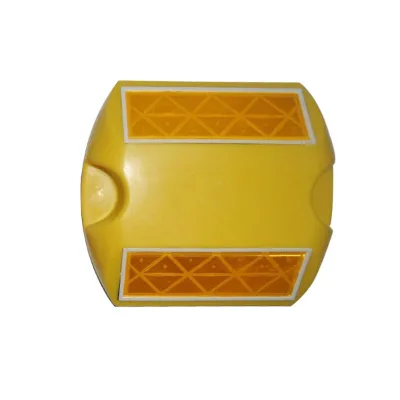
A double side reflector has reflective surfaces on both faces, so it returns light to drivers approaching from two directions, making it suitable for center lines and medians. A single side stud only faces one direction and is used on lane edges. Double-side models listed show two reflective surfaces, typically with a plastic body holding acrylic lenses on each side for retro-reflective carriage markings.
Can I order double side plastic road reflectors in low quantities?
Yes, low quantities are possible for some models. Observed minimum order quantities in this category range from as few as 2 pieces up to 5000 pieces, depending on the model and customization level. Stock items usually have lower MOQs, while customized logos or colors may require larger volumes. Always confirm the MOQ for the specific model and any customization before requesting a formal quotation.